Correlations
Correlations identify attributes that share a common value across different events. They are stored in the misp-attribute-correlations OpenSearch index and can be queried, regenerated, or deleted via the API.
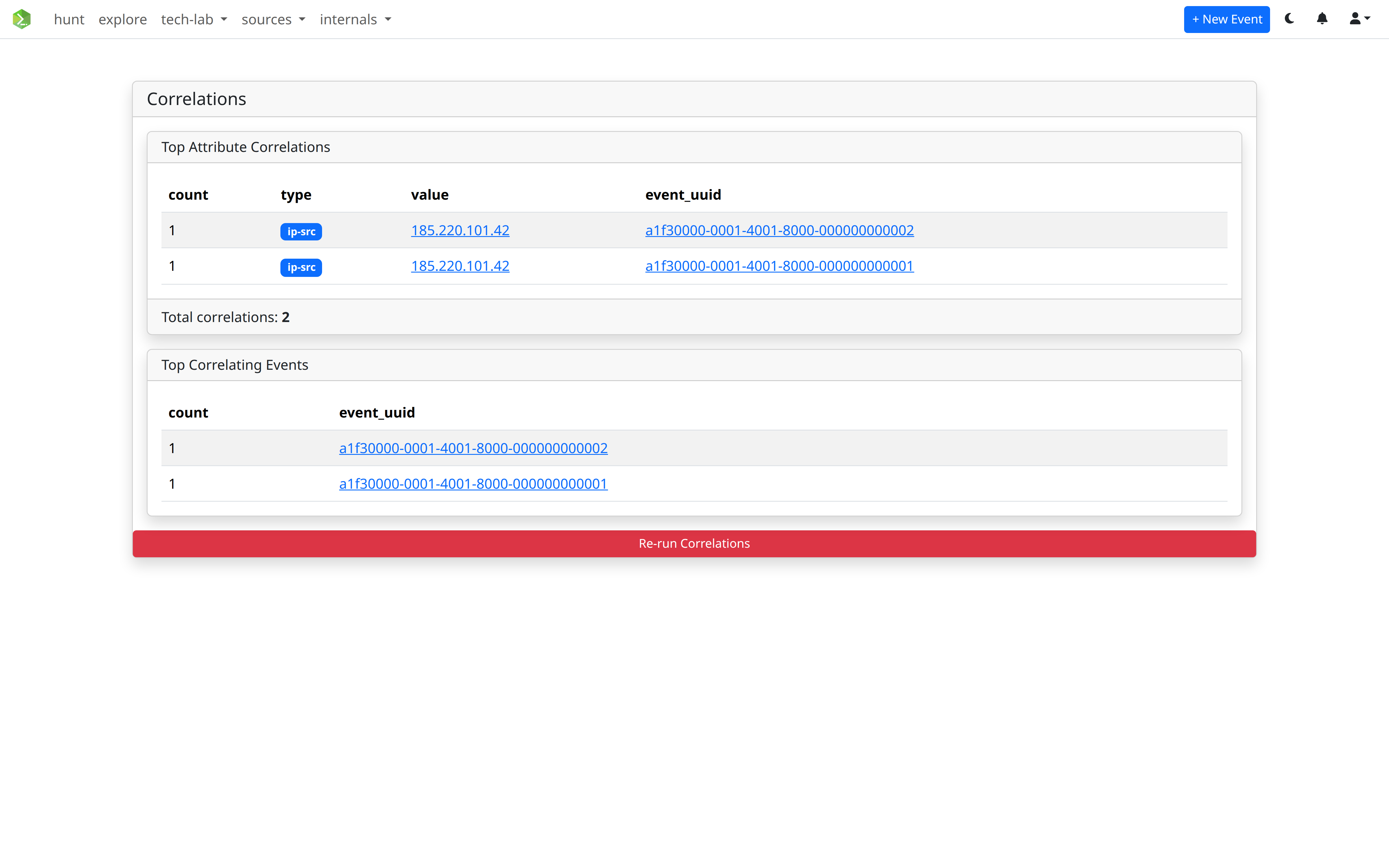
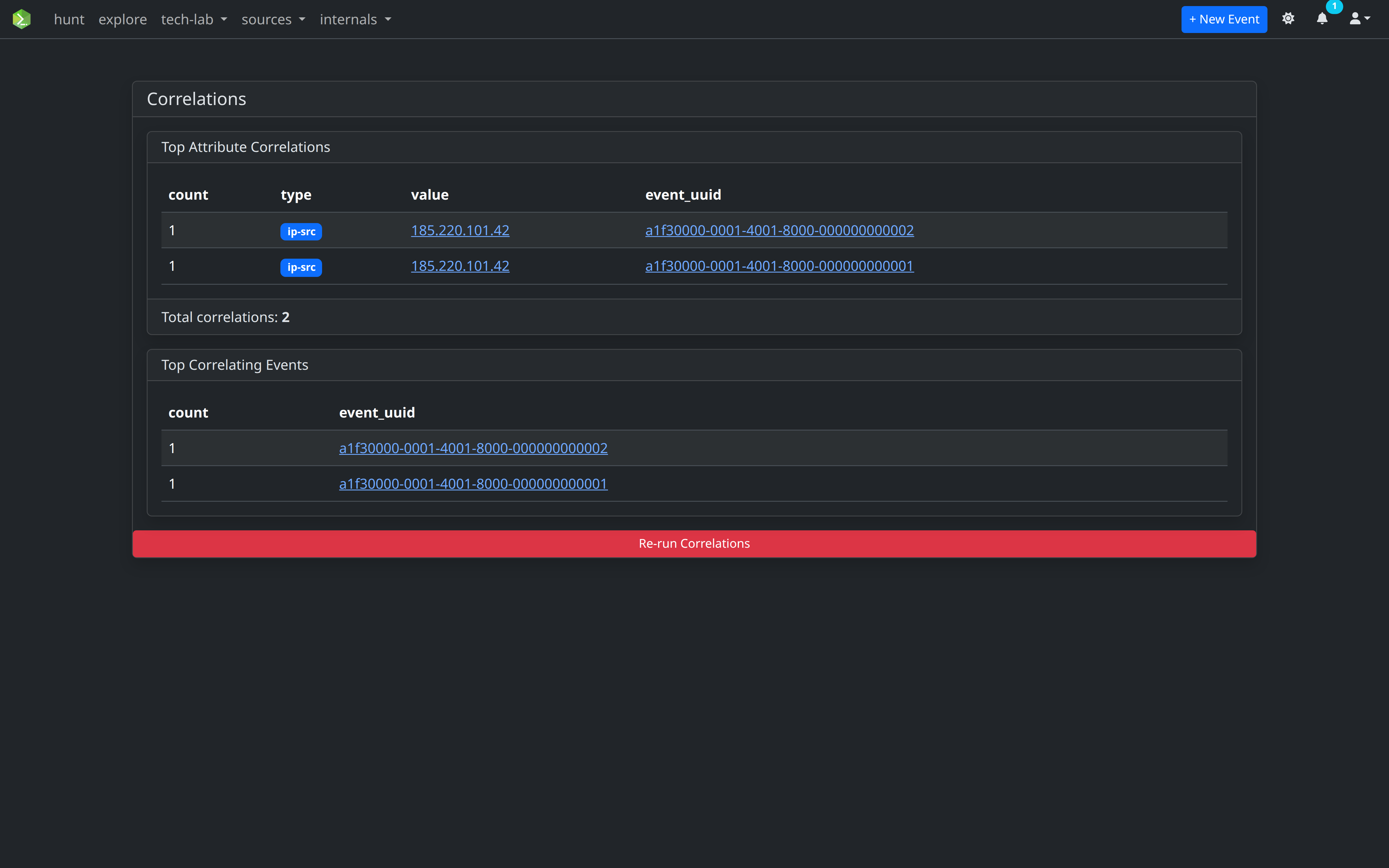
Correlations are computed automatically when an attribute is added or updated. To force a full re-run across all your data, go to internals → correlations and click the Re-run Correlations button. This may take some time depending on how large is your dataset.
How it works
When a correlation job runs, every attribute in the misp-attributes index is compared against all other attributes from different events using one or more match strategies. Matches are written to the misp-attribute-correlations index as correlation documents.
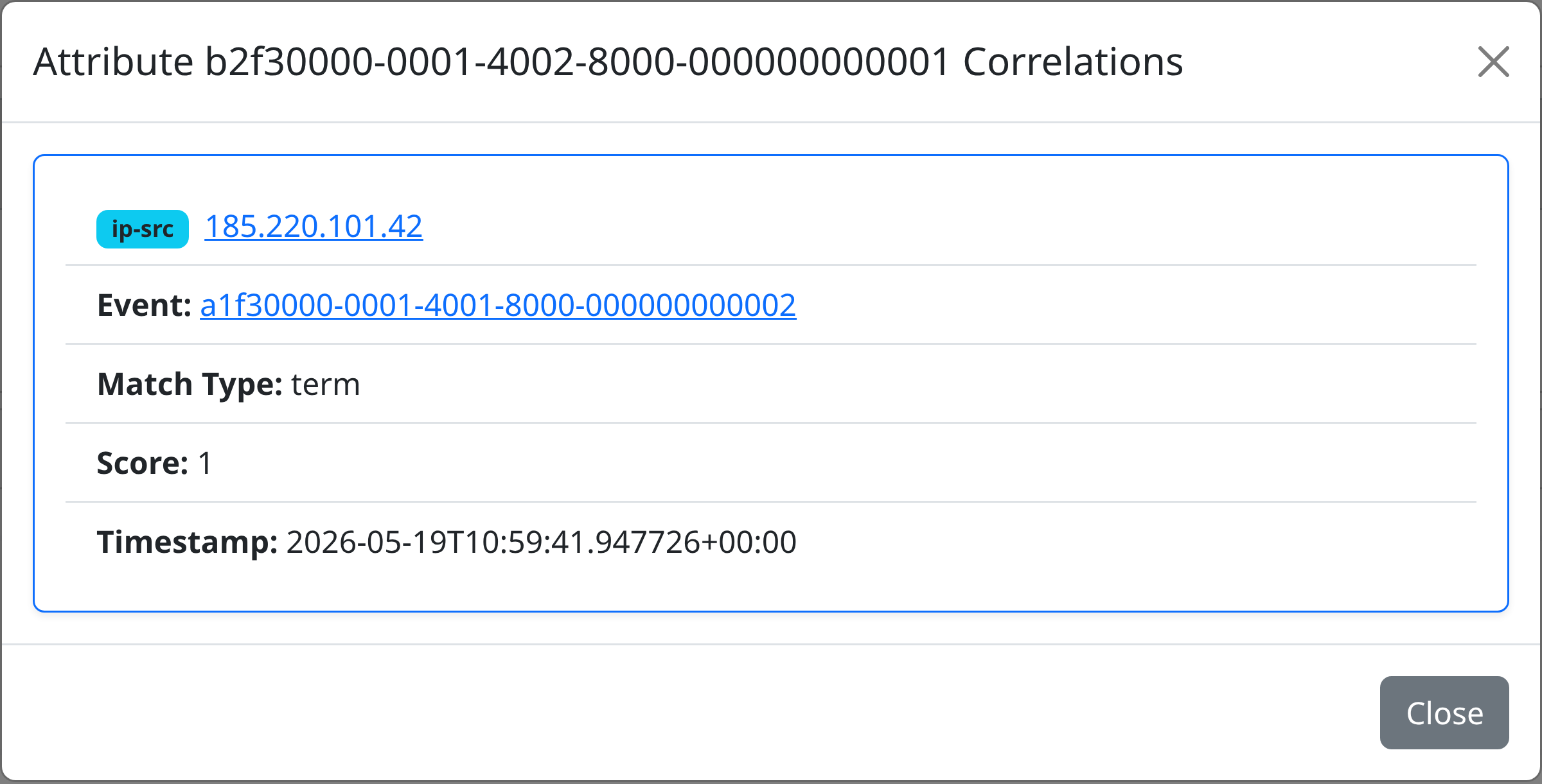
Each correlation document records:
| Field | Description |
|---|---|
source_attribute_uuid |
UUID of the attribute that triggered the match |
source_event_uuid |
Event the source attribute belongs to |
target_attribute_uuid |
UUID of the matching attribute |
target_attribute_type |
MISP type of the target attribute |
target_attribute_value |
Value of the target attribute |
target_event_uuid |
Event the target attribute belongs to |
match_type |
How the match was found (term, prefix, fuzzy, cidr) |
score |
OpenSearch relevance score |
Correlating Events
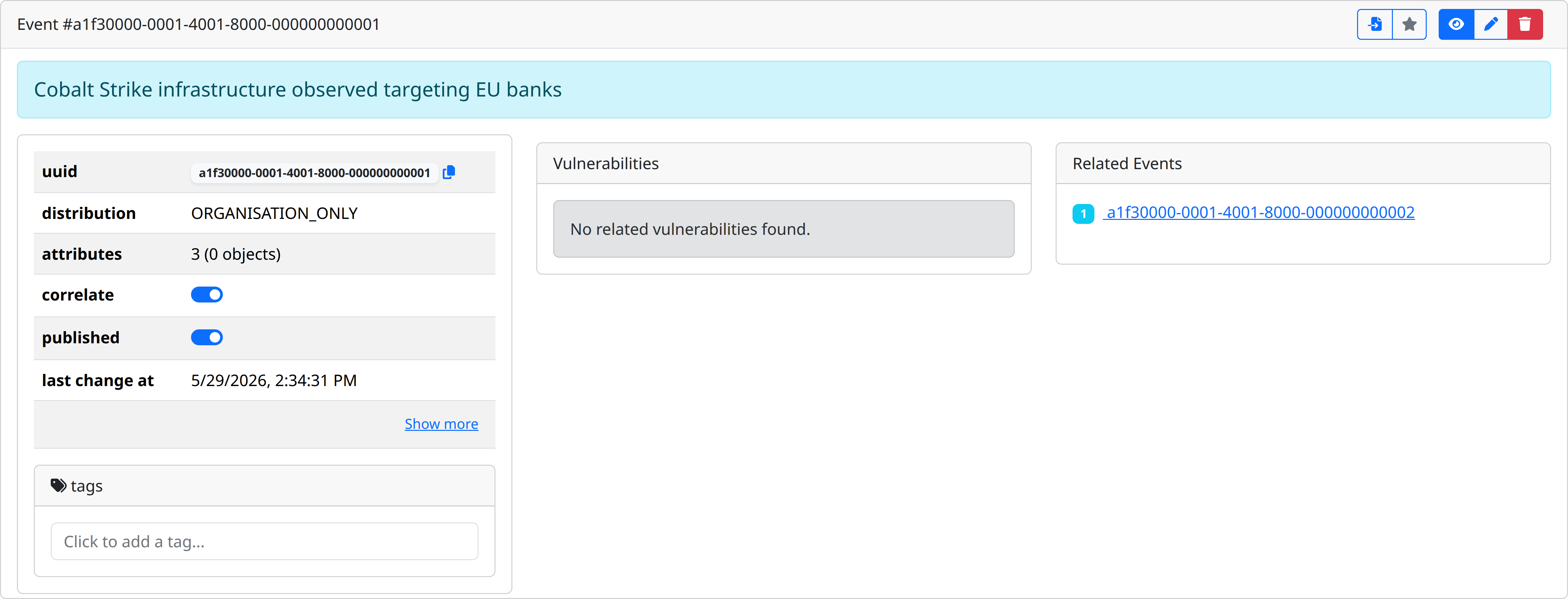
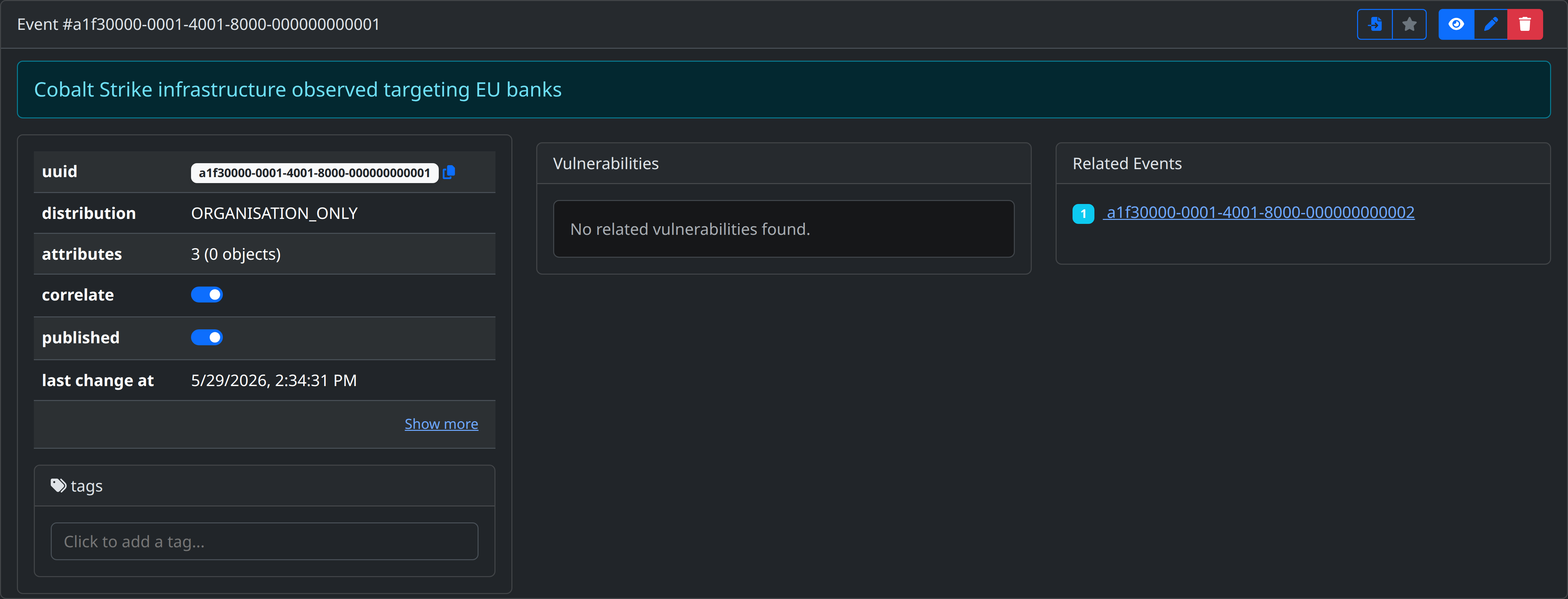
When attributes within an Event have correlations, a Related Events widget displays the number of correlations and the UUID of each related Event.
When an Attribute has a correlation, it displays a icon.


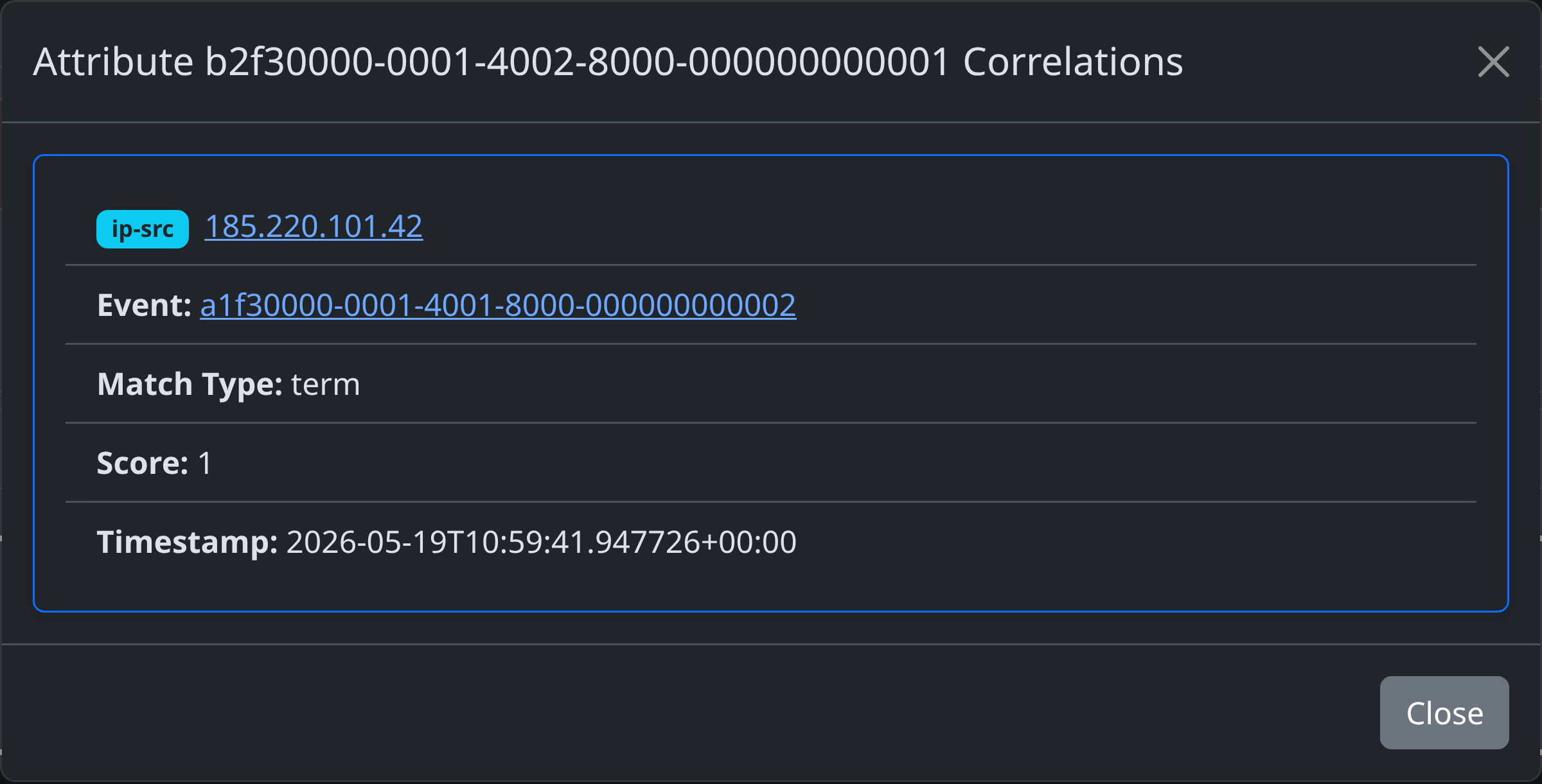
Clicking the icon opens a modal with the correlation details for that Attribute.
Match types
| Type | Description |
|---|---|
term |
Exact value match |
prefix |
Shared value prefix (configurable length, default 10 characters) |
fuzzy |
Approximate match using edit distance (default AUTO fuzziness) |
cidr |
IP-in-CIDR containment for IP attribute types |
Active match types and tuning parameters are controlled by runtime settings:
| Setting key | Default | Description |
|---|---|---|
correlations.matchTypes |
["term", "cidr"] |
Which match strategies to apply |
correlations.prefixLength |
10 |
Characters compared for prefix matches |
correlations.fuzzynessAlgo |
"AUTO" |
OpenSearch fuzziness value |
correlations.maxCorrelationsPerDoc |
1000 |
Max matches stored per attribute |
correlations.opensearchFlushBulkSize |
100 |
Bulk write buffer size |
Running correlations via the API
Enqueues a Celery task that scans all attributes and generates correlation documents.
Returns a task object with a task_id you can use to monitor progress via the tasks API.
Required scopes: correlations:create
Querying correlations
Supports optional filters:
| Parameter | Description |
|---|---|
source_attribute_uuid |
Filter by source attribute |
source_event_uuid |
Filter by source event |
target_attribute_uuid |
Filter by target attribute |
target_event_uuid |
Filter by target event |
match_type |
Filter by match strategy |
page |
Page number (default 1) |
size |
Page size (default 10, max 100) |
Required scopes: correlations:read
Top correlated events
Returns the 10 events most correlated with a given source event, ranked by correlation count.
Required scopes: correlations:read
Stats
Returns aggregate statistics: total correlation count, top 10 correlating events, and top 10 correlating attributes.
Required scopes: correlations:read
Deleting correlations
Drops and recreates the misp-attribute-correlations index, removing all stored correlations. Run POST /correlations/run afterwards to regenerate.
Required scopes: correlations:delete
API reference
| Method | Path | Description | Scopes |
|---|---|---|---|
GET |
/correlations/ |
List correlations (paginated, filterable) | correlations:read |
POST |
/correlations/run |
Enqueue a full correlation scan | correlations:create |
GET |
/correlations/stats |
Aggregate statistics | correlations:read |
GET |
/correlations/events/{uuid}/top |
Top events correlated with a given event | correlations:read |
DELETE |
/correlations/ |
Delete all correlations | correlations:delete |